Monday, December 20, 2010

Naive. Super by Erlend Loe

This is a sweet book that is misleadingly simple. With easy to read language, the character ruminates on such topics as space, time, bouncing a ball on a wall, love, toys, travel and what makes some friends good and others bad. An enjoyable novel that is perfect for a weekend on the cottage or during a trip.

3 out of 5 stars

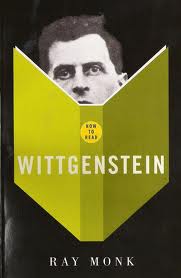
How to Read Wittgenstein (How to Read) by Ray Monk

This is a brief introduction to the philosophical work of Ludwig Wittgenstein. In just over 100 pages, the reader is provided with a selected group of passages of Wittgenstein’s written work, with accompanying commentary. Though I still have countless questions about Wittgenstein’s philosophy, this book does provide a good starting point to understand the complicated work of this famous philosopher.

2 1/2 out of 5 stars

The Emerging Democratic Majority by John B. Judis

Contemporary politics in the United States is obsessed with the short-term. That is why this excellent book, which was written in 2002, is such a fresh of breath air. Written at a time when George W. Bush seemed invincible, this prescient work boldly predicted that, by decades end, the Democrats would emerge with a new majority that would replace the Reagan coalition.

With great detail, Judis and Teixeira clearly explain the deep cultural and demographic changes that are taking place in the U.S., and why they are leading to a Democratic majority. With a long-view of history, this work provides a fascinating description of the foundation that ultimately led to the election of President Obama.

4 out of 5 stars

Transmetropolitan Vol. 01: Back on the Street by Warren Ellis

Despite having stunning illustrations, I found this comic to be incredibly stupid. For reasons I don’t quite understand, it has been praised by some writers that I highly respect. But don’t be fooled, this story is as sanctimonious and insufferable as a Fox News program.

A basic description of our protagonist Spider Jerusalem would go like this: imagine Hunter S. Thompson in the far future living in self-imposed exile in the mountains. After being threatened with a lawsuit by a book publisher, he returns to the city to restart his journalism career. Soon after arriving in the throbbing metropolis, he uses threats to land a reporting job, and then puts his drug-addled energy and schizoid mind to expose, among other things, the utter rot of religion and the brutality of a government crackdown on human-alien hybrids.

Sound interesting? It most certainly does. Does it deliver? Unfortunately not, for instead of an intriguing character, Spider turns out to be a boring collection of gonzo clichés and juvenile behaviour. In short, this is a disappointing story with spectucular drawings.

2 out of 5 stars

The Five Ages of the Universe: Inside the Physics of Eternity by Fred Adams

I couldn't stop reading this remarkable book. In just over 200 pages, the authors provide a description of the evolution of the universe, (as predicted by our current understanding of physics), from the big bang to the far distant future, when stars, planet, galaxies and even black holes no longer exist. By the end of the book, Adams and Laughlin are describing a universe that is 10 to the power of 100 years old (that's 1 followed by 100 zeros). A time span this large is almost incomprehensible for humans to contemplate.

As I turned the pages, I was repeatedly awed by a slew of brilliant ideas. Among some of the more fascinating thoughts: Whether a cosmic computer made of black holes could result in conscious life; if other universes can be created – as many physicist believe – then is it possible that universes are born, die and evolve in a manner similar to Darwin’s theory of evolution; and is it possible to travel to the distant future, given what Einstein’s theory of relativity tells us about space and time.

This is a wonderful book that left me in a constant state of wonder, and which has inspired me to read further about astrophysics.

5 out of 5 stars

40 More Years: How the Democrats Will Rule the Next Generation by James Carville

The U.S.-pundit class is filled with half-crazed ideologues that prefer to rant rather than think. Whether it’s the obnoxious jerks of the “right” (e.g. O’Reilly, Limbaugh, Coulter and Hannity) or the blowhards of the “left” (e.g. Ed Shultz and Keith Olbermann), political discourse in the U.S. has been hijacked by poseurs who would rather yell than exchange ideas.

James Carville – the famed strategist who helped elect President Bill Clinton – is a card carrying member of the screaming punditocracy. As this book demonstrates, Carville is very good at insulting Republicans, but not that good at engaging his political opponents in order to find solutions for the problems facing the United States.

That being said, this book does contain some thoughtful analysis. After ploughing through more than 100 pages of insults, Carville provides a convincing argument for why Democrats are better managers of the economy than Republicans. He also has an interesting chapter on young voters, and how Barack Obama's ability to capture the youth vote in 2008 could translate into long-term electoral victories for the Democrats. Besides these hidden gems, however, this book is just another addition to the sad canon of political temper tantrums.

1 out of 5 stars

Sunday, December 19, 2010

Universe on a T-Shirt: The Quest for the Theory of Everything by Dan Falk

A fascinating history of the scientific search for the Theory of Everything, i.e. a unifying theory that explains the structure of the universe. Ranging from the ancient Greek philosopher Democritus, who speculated that matter was formed by a basic entity called atomon – today we call them atoms – to the Copernican revolution in the middle ages, the development of Newtonian mechanics in the 17th and 18th centuries, the formation of electromagnetic theory in the 19th century, Einstein’s discovery of special and general relativity in the first-half of the 20th century, and the mind-blowing conclusions of quantum mechanics and string theory, this book is a captivating read.

After describing how scientists have searched for answers to such questions as “what is the universe? What is it made of? How did it begin? And how will it evolve?” Dan Falk concludes his book by discussing the limits of scientific knowledge, and what a Theory of Everything, if one is ever found, would mean. A great read for anyone interested in the history of physics and the latest theories of the structure of the universe.

3 1/2 out of 5 stars

In Search of Time: Journeys Along a Curious Dimension by Dan Falk

This is a brilliant book that asks the question, "What is time?" In easy-to-read language, Dan Falk explains such mind-bending concepts as string theory, Einstein’s theory of relativity, the quest to build time machines and the view held by some physicists that time is an illusion.

Adding to this fascinating discussion are chapters on the development of the calendar, the creation of such concepts as “hour” and “second”, and a captivating discussion on the future of the universe and the human race. This book is a wonderful read that will capture the imagination of anyone who is interested in time and the fabric of reality.

4 out of 5 stars

A Wall of Light by Edeet Ravel

This delightful novel was a pleasure to read. Taking place over a single day, it recounts the life of Sonya Vronsky, a mathematics professor at Tel Aviv University who is deaf. Over the course of a day, Sonya kisses a student, seduces a taxi driver, discovers who her father is and leaves her brother.

Accompanying this intriguing narrative are two parallel story lines. The first is told through a series of journal entries from the 1980s and ‘90s that are written by Noah, who is technically Sonya’s nephew, but in reality is older that her aunt. The second parallel narrative describes a love story from the 1950s, and is told through a series of letters that Sonya’s mother wrote to her lover in Russia. The overall effect is a beautiful montage of overlapping story lines that combine into a wonderful tale.

4 out of 5 stars

Open & Shut: Why America has Barack Obama, and Canada has Stephen Harper by John Ibbitson

John Ibbitson should be commended for writing this book. I say this despite not agreeing with all of his arguments, which at times are contradictory. The point of this work, however, is not to make the reader agree with everything that Ibbitson says, but rather to start a conversation on a new approach to Canada-U.S. relations, and for that he deserves well-earned kudos.

In a nutshell, this book makes a convincing case that a person like Barack Obama could never become Prime Minister of Canada, due to the closed nature of Canada's political parties. It also puts forward a convincing argument that Canadian politics is overwhelmingly dominated by white males, despite our multicultural society. This is in sharp contrast to the U.S., where minorities wield a lot more political power. After making these very important points, Ibbitson counsels Canadians to get-over our inherent anti-U.S. smugness, and to be open to the possibility that we could learn some things about improving democracy from the United States.

On the negative side, however, this book contains some flaws. More specifically, on more than a few occasions, Ibbitson puts forward two different arguments which, on reflection, contradict each other. For instance, Ibbitson warns that Obama's environmental policies could hurt the Canadian economy as it could reduce production in the Alberta oil sands. (This leaves the reader with the impression that Ibbitson favours the development of the oil sands). Later in the book, however, he goes on to argue that Ottawa should participate in a cap-and-trade system with the U.S., even though this would also hurt oil sands production. (This second argument seems to favour the environment over short-term economic gain). At no point, however, does Ibbitson provide a clear answer to the question of how much oil sands production -- if any -- should be allowed, while balancing environmental concerns.

Despite these inner inconsistencies, however, this book is a fascinating read that will make Canadians rethink their relationship with the Unites States. In short, this is a well-written work that is well worth reading.

3 out of 5 stars

Obama: The Historic Journey by The New York Times

This book contains beautiful photographs but not much else. Purporting to be an in-depth look at the election of President Obama, this special collection is in reality a mishmash of previously published columns in the New York Times, snippets of news stories from Times' reporters, and -- in an annoying twist -- declarations on why the NYT's election coverage was so fantastic.

If you want a coffee table book with gorgeous photography, then this could be for you (though you would not be missing much if you skipped over the text). If you are looking for insight, however, then you would be better off taking a pass on this book.

1 1/2 out of 5 stars

Dark Days by Kerry Pither

This book should be read by all Canadians. Brilliantly researched and well-written, Dark Days tells the story of four men – Maher Arar, Ahmad El Maati, Abdullah Almalki and Muayyed Nureddin – who were detained in Syria, and then tortured, after being subject to investigation by Canadian police and security officials. In the case of El Maati, after spending over two months in Syria, he was transferred to Egypt where he was again tortured while being held in detention for 24 months.

Maher Arar has become a household name in Canada after a public inquiry found that he was falsely accused of being involved in terrorism. According to a report released in 2006 by Justice Dennis O'Connor, who headed an inquiry into Arar’s case, the RCMP passed on information to U.S. authorities that was, “inaccurate, portrayed him in an unfairly negative fashion and overstated his importance in the RCMP investigation.” This information, the report concluded, “very likely” led to the arrest of Arar at John F. Kennedy Airport in New York in September 2002, before being deported to Jordan, and then Syria, where he was repeatedly tortured. The Government of Canada later apologized to Arar and compensated him with more than $10 million.

The Arar story by itself is outrageous. But what is even more horrific is that at least three other men were detained overseas and subject to torture. A report released in 2008 by former Supreme Court of Canada justice Frank Iacobucci, who headed an inquiry into the men’s detention, concluded that the three men were tortured. The report also concluded that:

* The actions of the RCMP and CSIS indirectly led to the torture of El Maati;

* "Two actions of the RCMP" indirectly led to the torture of Almalki; and

* Certain instances of information sharing by CSIS and RCMP officials indirectly led to the torture of Nureddin.

In June 2009, the House of Commons public safety committee recommended that Canada formally apologize and compensate the three men.

5 out of 5 stars

Off the Wall: Graffiti for the Soul, Collected by Ernie J. Zelinski

A quirky collection of graffiti scrawls taken from bathrooms, workplaces, universities and other public places. Among some of the funnier quotes are:

* The only thing that my mother and father ever colloborated on was me.
* All the women complaining about how hard it is to find a husband obviously have never had one.
* Modern art is buying a painting to cover a hole in the wall and then deciding that the hole looks better.
* Flies spead disease. Keep yours zipped.
3 out of 5 stars

The Traveler (Fourth Realm Trilogy, Book 1) by John Twelve Hawks

This novel is like the Matrix movie trilogy: A brilliant plot line that grips its audience from the beginning, only to lose steam, and then wither away into a typical action thriller.

The book begins with a wonderful story of the epic struggle between the "Travelers" and the "Tabula". The Travelers refer to a series of people throughout history who have been able to project their life essence into other realms, and in the process gaining a perspective of life that fosters revolutionary ferment on Earth. The Tabula, on the other hand, are a secret group who want to kill the Travelers, in order to impose complete control on the human race. Caught in the middle of this struggle are a group of warriors known as Harlequins, who are sworn to defend the travelers.

The first-half of this novel (the first book of The Fourth Realm series) is a wonderful page turner that contains excellent writing. Unfortunately for the reader, however, the second-half of the book descends into a ho-hum action chase, that undermines the wonderful plot line. I still plan to read the rest of this series, but I hope that the following books are more Matrix I then Matrix II or III.

2 1/2 out of 5 stars

A Long Time Coming by Evan Thomas

This is an in depth account of the 2008 U.S. presidential election, aided by the reporting of the staff of Newsweek. For those who followed last year's campaign closely, there isn't a lot of new material here that hasn't been reported elsewhere. This being said, there are some funny vignettes, such as Joe Biden saying, "Who's Palin?" when first told that John McCain had picked Alaska Governor Sarah Palin as his running mate.

Though this book doesn't provide many new insights, it is well writen, and also does an excellent job of describing the Democratic and Republican primary campaigns, and then the general election. Overall, this is an interesting read for political junkies who are intersted in U.S. politics.
3 out of 5 stars

Saturday, December 18, 2010

American Widow by Alissa Torres

This graphic novel tells the story of Alissa Torres, whose husband Eddie started working in the World Trade Center on September 10, 2001, only to be killed the following day in the terrorist attacks. Pregnant and widowed, American Widow recounts how Alissa learned to deal with her loss, and then after giving birth to her son Joshua raising him as a single mother.

With beautiful illustrations and melancholy storyline, this haunting book captures the chaos and tragedy that engrossed New York City in the days and months following the attack, as well as the personal tragedy of those who lost family and / or friends on that fateful day that saw thousands of people killed. It also describes the ensuing financial and legal fight that many of the victims families were forced to launch, as they struggled to receive the monetary assistance that they were promised.

3 out of 5 stars

The Fate of Mice by Susan Palwick

Every once in a while you discover a writer that simply blows you away. Susan Palwick is one such author.

In this fantastic collection of short stories, the reader is introduced to a series of fascinating characters. For instance, there is Rodney, an IQ-enhanced mouse, who becomes self-aware and is forced to confront his own mortality. Then there are the victims of a terrorist attack, who are revived for a day so they can remind the living that they should cherish life. In another story, we meet a girl who discovers that her mother is a captured snow-maiden. And then there is the tragic love story involving a female werewolf, and another tale that recounts how a young boy deals with his father's suicide.

This collection of short stories is simply fantastic, and I will definitely pick up Palwick's novels to read. I highly recommend this book to anyone who is interested in first-rate fiction.

4 out of 5 stars

Always a Body to Trade by K. C. Constantine

An unidentified young woman is found murdered by the police. Without any leads to work with, Chief Mario Balzic begins his search to find the killer of the nameless Jane Doe. But what starts as a mysterious murder soon turns into a sordid tale of police corruption, coupled with a power struggle between the police chief and the newly-elected Mayor, whose naive morality clashes with the reality of detective work.

In this installment of the Mario Balzic series, K.C. Constantine presents once again his brilliant dialogue and his frank, no-nonsense portrait of blue collar United States. The book is especially adept at portraying the overt racism of the late-1970s, as well as the messy reality of the legal system.

Unlike with his best work, however, this novel contains some uneven characters, particularly with some of the drug dealers who appear more clownish than human. That being said, the second-half of the story is quite good, and by the end of the book the reader is reminded once again why Constantine is such a strong writer.

3 out of 5 stars

Bush at War by Bob Woodward

An intersting look at the initial reaction of the United States to the terrorist attacks of September 11, 2001. With unparalleled access, Woodward describes how President Bush and his top officials planned the invasion of Afghanistan, in order to defeat Al Qaeda and their Taliban hosts. With great clarity, the reader is given a look into the animated debates between Secretary of State Powel and Vice-President Cheney, the moral certainty of President Bush, and the hardheadedness of Defence Secretary Rumsfield, who was intent on forming a new military strategy.

Reading this book in 2009, however, seven years after it was published, one can't help but shake their head in amazement about everything that has occurred since then. It is also inevitable to ask such counter-factual questions as: What would have happened if Bush did not invade Iraq? Or, would things have turned differently if the White House had used all of their energy to reconstruct Afghanistan? Unfortunately, we will never know the answer, but at least we can imagine a parallel universe were the international goodwill that arose after September 11 was not squandered.

3 out of 5 stars

Cancer Vixen: A True Story Marisa by Acocella Marchetto

An incredible memoir about one woman's struggle against breast cancer. As a cartoonist for Glamour and the New Yorker magazine, Marisa Marchetto was a self-described, "shoe-crazy, lipstick-obsessed, wine-swilling, pasta-slurping" fashionista. But when she is diagnosed with cancer, just before her wedding no less, she is forced to confront a difficult new reality.

Incredibly, rather than letting cancer defeat her, Marchetto decides to use her artistic skills to recount her struggle. The result is a beatiful love story (she ends up marrying her fiance Silvano) that is filled with humour and wit. A definite inspiration for anyone whose life has been affected by cancer.

3 out of 5 stars